Concrete block walls in Lakewood CA - a wall built to hold up for years
Cracked block, a wall starting to lean, or an old fence you're done with? We build block walls that stay solid and keep their line.
- Fence or retaining, first We ask early whether your wall holds back dirt.
- Steel and joints planned We place rebar and joints so cracks land where we want.
- Sprinklers kept off block We keep sprinklers from soaking the wall once it's built.
- Laid without rushing Careful block work, done at the pace a good wall needs.
- Licensed and fully insured.
- Free quotes on site.
- Replies within 1 business day.
How do you know your block wall needs work?
A block wall usually tells you it's in trouble long before it falls over. If you catch these signs early, the repair stays small or a new wall gets planned right.
Cracks through the block
Straight or stair-step cracks usually mean the wall shrank or moved with nothing planned to take it. Water works into the crack, and it tends to keep growing.
Wall leaning to one side
A lean usually means soil is pushing on a wall that was built as a fence. The longer it goes, the more of it ends up rebuilt.
White crust on the face
A chalky white film usually means water keeps getting into the block, often from sprinklers. Find the water first, or you'll be scrubbing the same wall every spring.
Dirt piled against the wall
Raised planters or a regraded yard can turn a garden wall into a retaining wall it was never built to be. That load usually shows up later as cracks or lean.
Loose or missing cap block
The top course takes the most weather, and once the caps loosen, rain runs straight down into the block. Fixing a few caps now beats chasing water damage later.
A fence you're done with
A rotting wood fence or tired chain link is a good time to look at block, because it gives you privacy and never needs another coat of stain.
How we build concrete block walls
A concrete block wall in Lakewood is usually a fence or garden wall, and the first thing I ask is whether yours will hold back dirt or just stand there, because that changes the whole job from the footing up. Once we know, we lay out the line, dig and pour the footing, and set the steel. We plan the rebar and the control joints, planned seams in the wall, so shrinkage cracks go where we want them instead of wandering across the face. Then we lay and grout the block, finish the top, and make sure the sprinklers aren't soaking the wall every morning. Price and schedule turn on the same few things: how long and tall the wall runs, whether it holds back soil and how easily a truck can reach it. Your estimate gives you the figure for your wall.
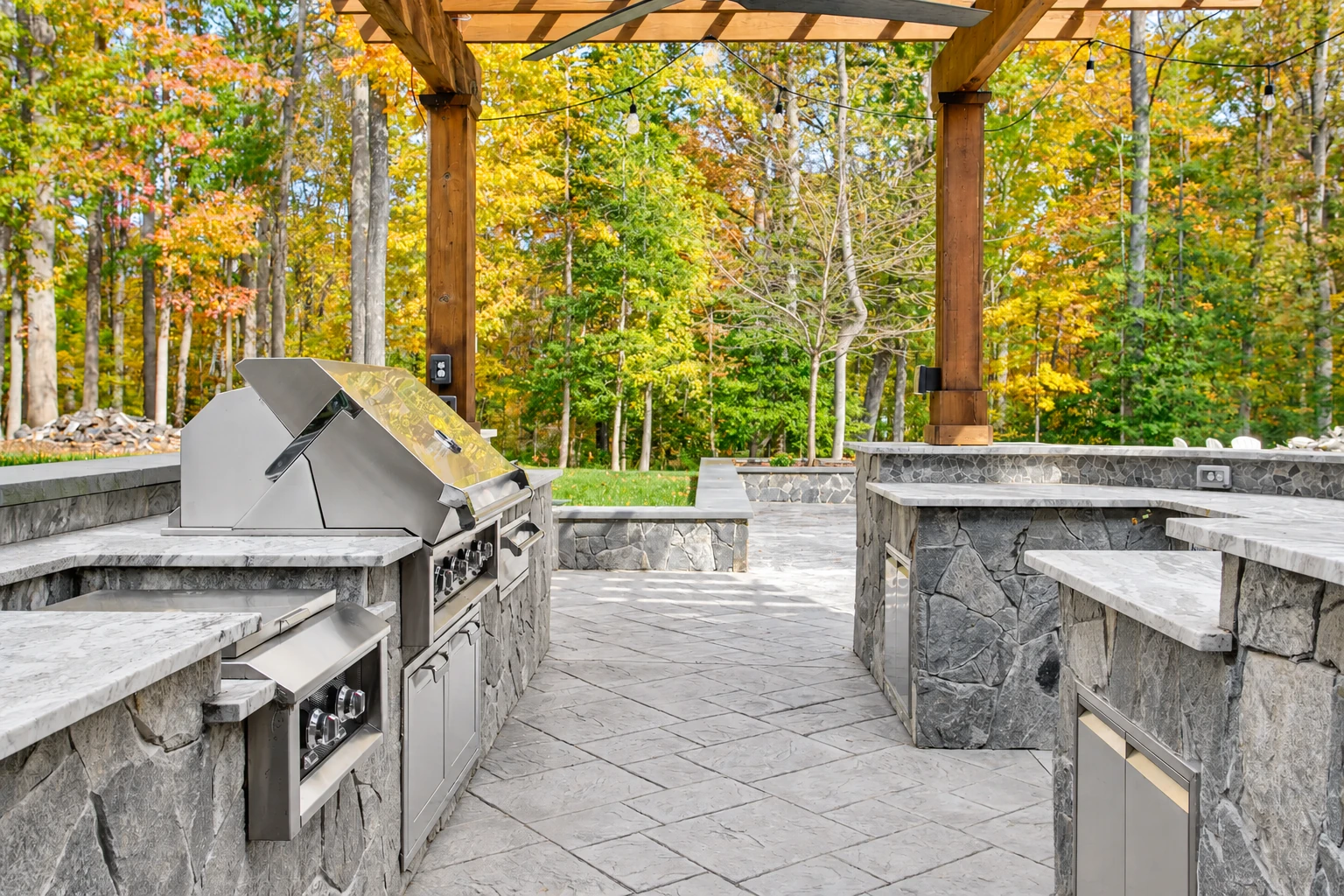
Some block jobs carry more than a fence line. If the block is holding up a house, a garage or an addition, that's foundation block wall installation, with its own footing and steel plan. If you'd like a grill and counter in the same yard, we can build the block base for outdoor kitchen masonry so it matches the wall. And when the dirt really is pushing, retaining wall construction is the right job, not a fence wall asked to do more than it can.
What happens when you call about a block wall in Lakewood?
Here's how a block wall job runs, from your first call to walking the finished wall together.
Call or send the form
Tell us whether the wall holds back soil and how a truck reaches the spot, because both shape what I look at when I come out.
Look it over and estimate
I come out, look at the ground and the access, and ask what you want. Then you get an estimate you can hold up against other bids.
Permit, then the build
If your wall needs a permit, we get it from the office for your address first. Then we dig, set steel and lay block.
Walk the finished wall
When the last cap is set and the site's cleaned up, we walk the wall with you and answer whatever questions are left.
Why Lakewood homeowners call Caliber Lakewood Concrete and Masonry
I look at your wall myself
I come out to look at the job myself, and the small crew I work alongside builds it, so nothing gets lost between us.
In business since 2017
I learned the trade under older masons, and for nine years we've built block the slow, careful way they taught me.
Licensed and fully insured
California's licensing board points owners to masonry or landscaping contractors for a decorative wall, so ask which license any bidder holds, us included.
An honest read on your wall
I'd rather tell you a wall is fine than sell you a new one. Our work is backed by our satisfaction guarantee.
Get a free on-site estimate for your block wall
Tell us roughly how long the wall runs, whether it holds back soil and how a truck gets to it. We reply within one business day, then I come out for a free quote on site with no obligation.
Block walls, caps and finishes
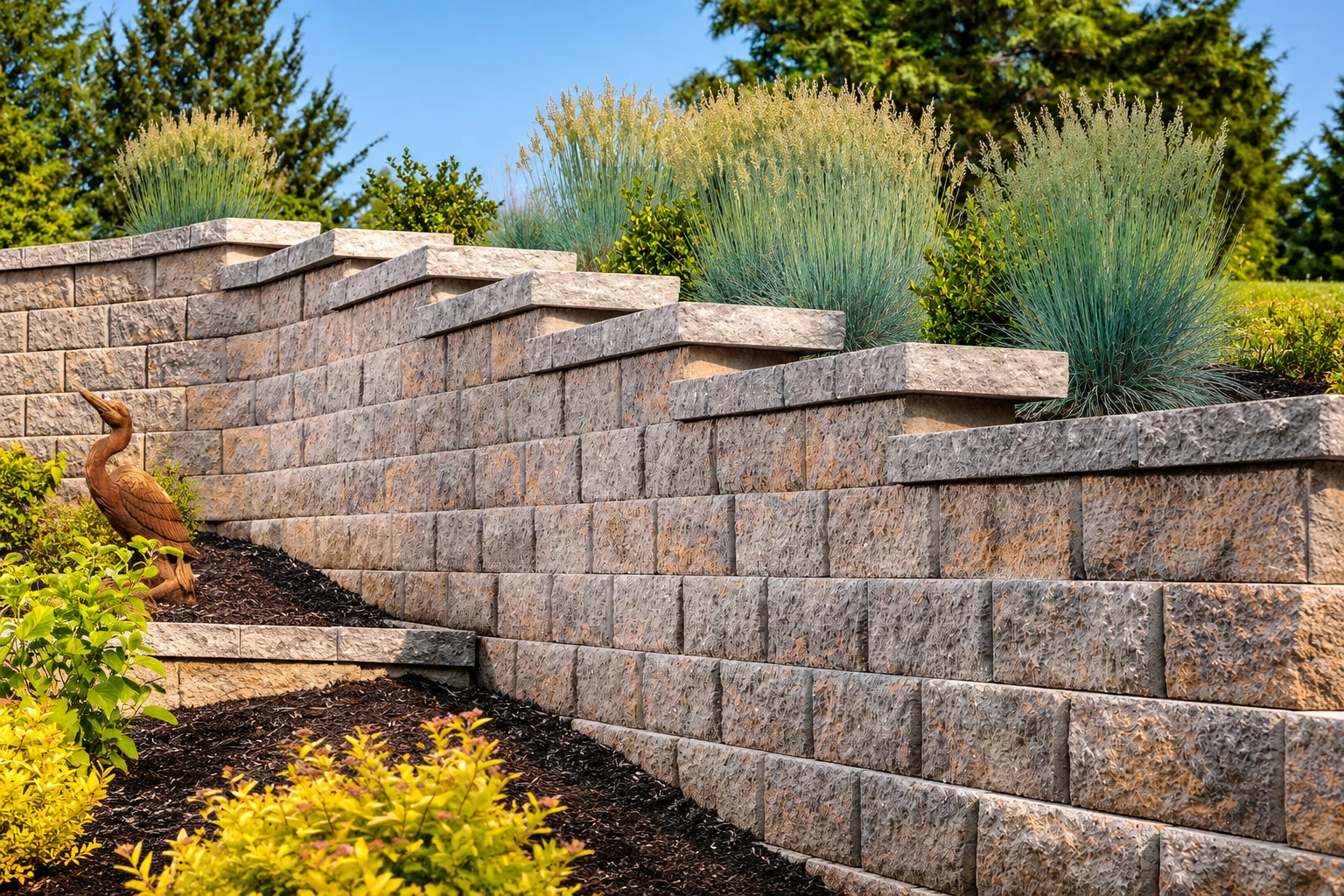
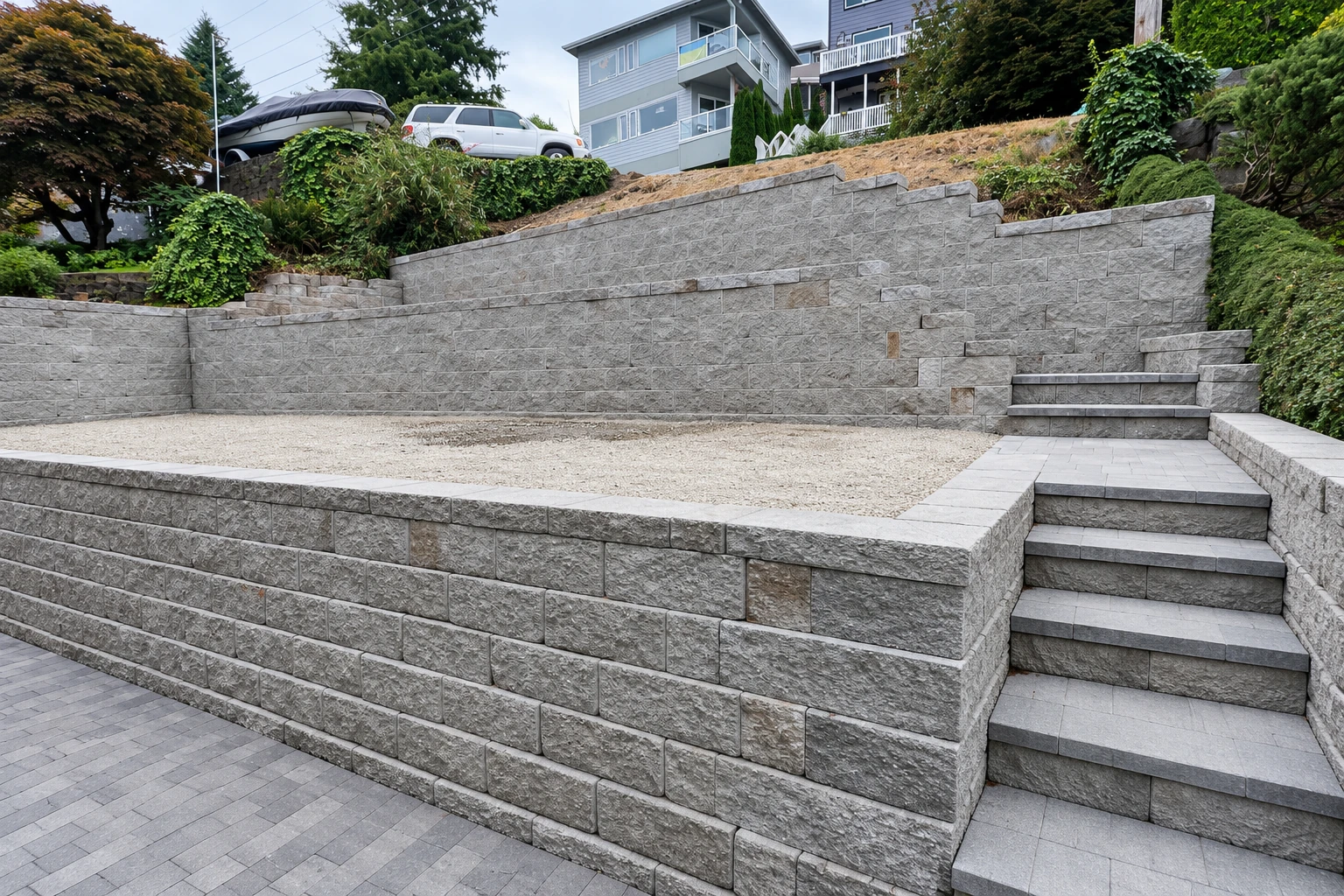
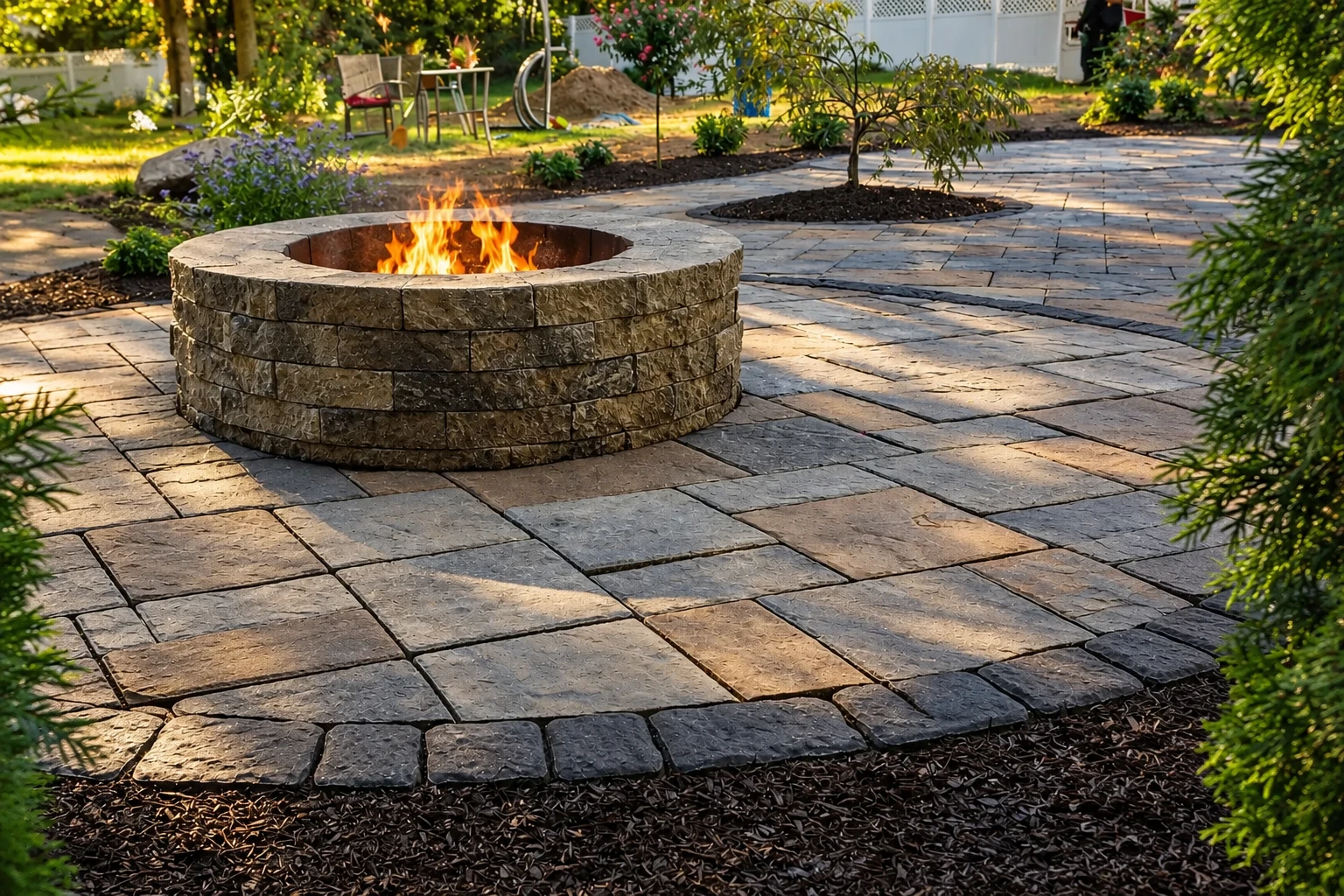
Look through these examples of block walls, caps and finishes to get a feel for what might suit your yard.
Block wall questions we hear
These are the questions homeowners ask most before they build or fix a block wall. If yours isn't here, call and ask about your own wall.
Who can legally build a block wall in California?
The state licensing board says a masonry wall built for its looks needs either a C-29 Masonry contractor or a landscaping contractor. A landscaping contractor can build a perimeter wall only as part of a full landscaping project, and an unlicensed person can only take on minor work up to $1,000 that needs no permit and has no employees on it. Ask which license a bidder holds before you hire.
Does a retaining block wall cost more than a fence wall?
Yes, because a wall that holds back soil needs engineering, bigger footings, more rebar and grout, plus waterproofing and drainage, according to one Los Angeles block supplier. That same supplier notes that tight side yards, hillside lots and hand-carried block add labor hours, while easy truck access keeps a bid down. Mention both when you call so the estimate reflects your yard.
What is the white powder on my block wall?
It's efflorescence, a white film of salts, and masonry industry guidance says it's a looks problem that won't affect how the wall performs structurally. When it keeps coming back, water keeps getting in or salts keep arriving, and a block maker points to irrigation as one source, since a freestanding wall is open at the top and both sides and usually has no water-repellent treatment. The first thing to check is where the sprinklers hit.
How do I keep a block wall from cracking?
Masonry industry guidance says horizontal reinforcement and control joints, placed the way local practice calls for, are what control shrinkage cracking. Ask each bidder how the steel and joints are planned for your wall, because a wall without them picks its own crack lines.
What is the best way to make a block wall last?
The right materials, a sound structural design and careful workmanship decide how long it lasts, because a block fence takes weather on both sides. A cap along the top helps too, since it keeps water out of the block and can improve the look. When you compare bids, ask each one about the block, the design and who'll be laying it.
What are concrete block walls good for besides privacy?
Homeowners build them for security, sound, shade and wind as well as privacy, and plenty go up just because they look better than what was there. If you know which of those matters most to you, tell us at the start, because it shapes the height, the cap and the finish.
Block walls across the cities we serve
We're based in Lakewood and work the cities around it, from Long Beach up to Fullerton and out to Costa Mesa. Pick yours below or give us a call.
Ready for a block wall that holds up?
Call (562) 249-2437 any day until 9 PM, or send the form, and tell us whether the wall holds back soil.