Driveway pavers in Lakewood CA - set on a base built to carry your car every day
Cracked, stained or sunken concrete out front? We lay interlocking pavers on a packed base made for daily driving, standard or permeable.
- Lines marked first We get buried utility lines marked before anyone starts digging.
- A base for cars The packed base underneath is built for daily car traffic.
- Both paver kinds explained Standard or permeable, we go over each before you choose.
- Careful, unhurried work We take the time the base needs instead of racing to finish.
- Licensed and fully insured.
- Free quotes on site.
- Replies within 1 business day.
How do you know your driveway is ready for pavers?
A tired driveway rarely fails all at once. These are the signs we see most, and catching them early usually means a simpler tear-out and less base work.
Cracks running across the slab
Long cracks in poured concrete usually mean the ground or the slab has moved. Leave them, and water gets under, the edges break off and patches stop helping.
One section sitting lower
A sunken or tilted section usually means the ground underneath settled or washed out. It's a trip hazard now, and it sinks a little more with every car.
Puddles that sit after rain
Water that pools on the driveway means it isn't draining off or through the surface. Standing water works its way into cracks and creeps toward the garage.
Pavers creeping out at the edges
On an older paver driveway, edge pavers drifting outward usually mean the edge restraint failed or was never put in. Once the outside row moves, the rest loosen behind it.
Weeds coming up through joints
Grass and weeds in the joints or cracks mean the sand or the surface has opened up. Pulling them helps for a week, then the gaps get wider.
Tree roots lifting the driveway
A ridge or a heaved slab near a tree usually means roots are pushing up from below. Waiting lets the lift spread and makes the tear-out bigger.
Driveway pavers in Lakewood, built from the base up
Every paver driveway in Lakewood starts with a look at what's there now and where the water goes when it rains. Before we dig, we get the buried utility lines marked, because a shovel through a water line makes for a long afternoon. Then we tear out the old driveway, dig down and build the base in packed layers to carry a car, not a patio chair. We run edge restraint around the outside wherever nothing else holds the pavers in, set the interlocking pavers, sweep sand into the joints and compact the surface. If you're weighing pavers that let water through, we walk you through both kinds before you choose. The size of the driveway and how much old concrete has to come out move the price and the schedule most, and your estimate puts your own figure on it.
A new driveway often shows up the work right next to it. If the drive runs along a slope or a raised bed that's slumping, a short retaining wall holds the soil back so it doesn't push on the new edge. And if the brick steps, porch or planters beside it look worn out next to fresh pavers, our masonry restoration work brings them back in line.
What happens after you call about a paver driveway
Here's how a paver driveway goes with us, from the first call to walking the finished surface together.
Call or send the form
Call (562) 249-2437 or send the form, and I'll set a time to come out, look at the driveway and ask what you want.
Go over your estimate
The estimate spells out the tear-out, the base, the paver and pattern, and standard or permeable, so you know what you're paying for.
Sort permits, then build
If you go ahead, we check which office handles permits for your address and get any you need first. Then the crew digs and builds.
Walk the finished driveway
We clean up, then walk the new driveway with you, checking the edges, the joints and how it meets the garage and street.
Why Lakewood homeowners call Caliber Lakewood Concrete and Masonry
I come out to every job
I look at your driveway myself, and the small crew I work alongside does the work, so nothing gets lost between us.
Doing this since 2017
Started in 2017 after learning under older masons, and I'd rather tell you a driveway can wait than sell you one.
Licensed and fully insured, every job
That covers your property and our crew while the old driveway comes out and the new one goes in.
Used to Lakewood's driveways
Much of what we pull out around Lakewood is worn poured concrete. Call (562) 249-2437 and I'll come look at yours.
Get an estimate for your paver driveway
Put in your address and whether you're leaning toward permeable pavers, and email photos of the driveway to hi@lakewoodconcreteandmasonry.com if you have them. We reply within one business day, and I come out for a free estimate with no obligation.
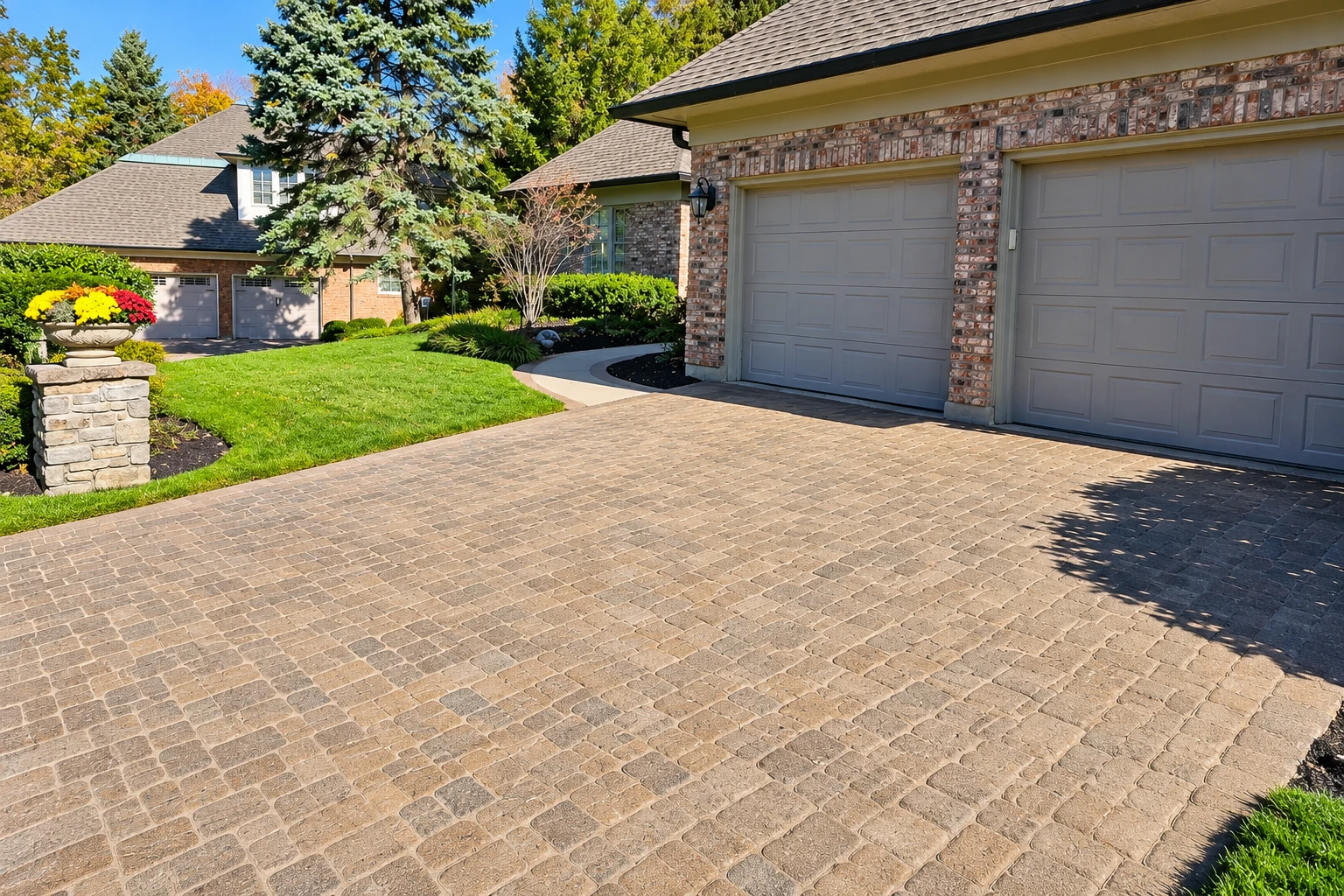
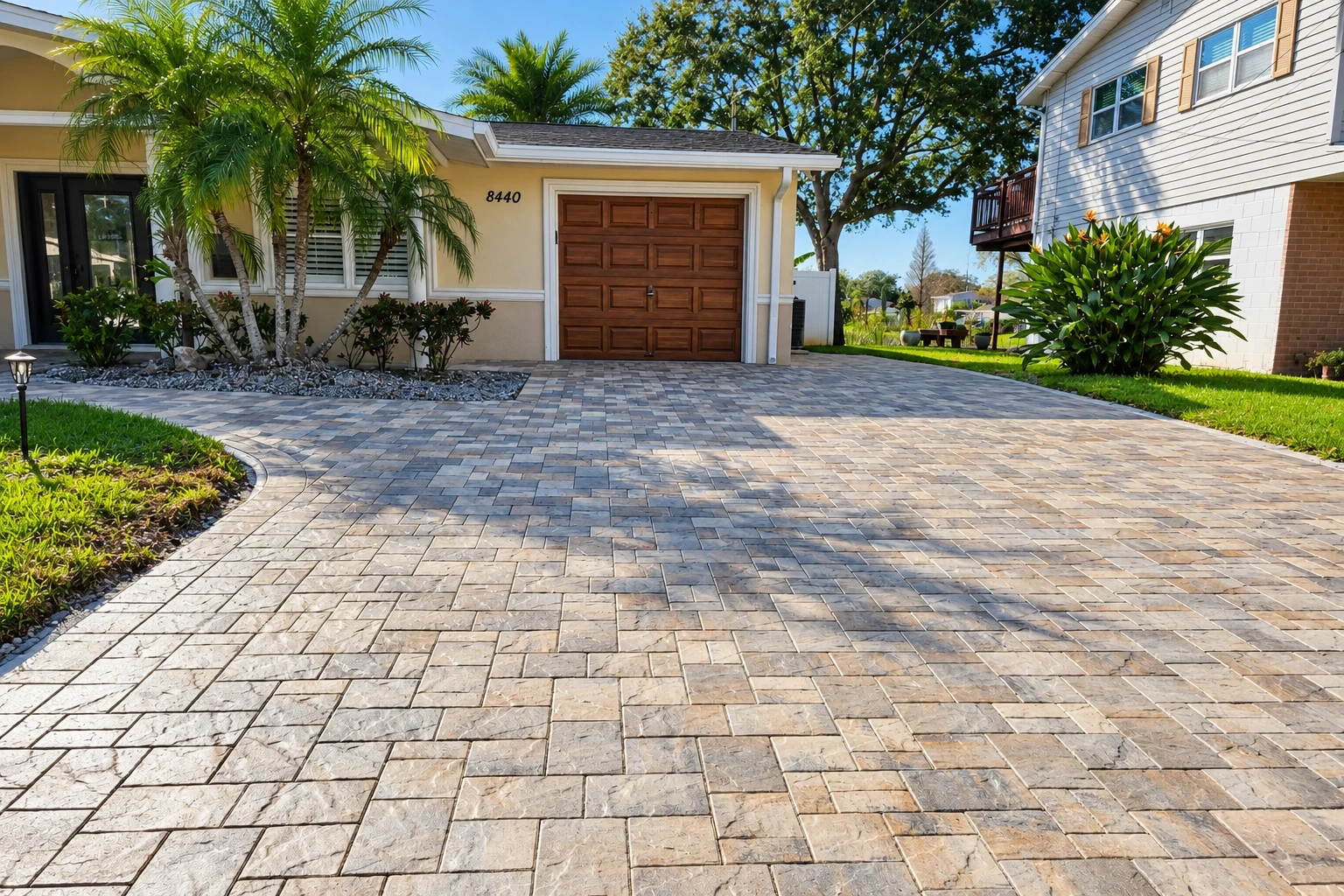
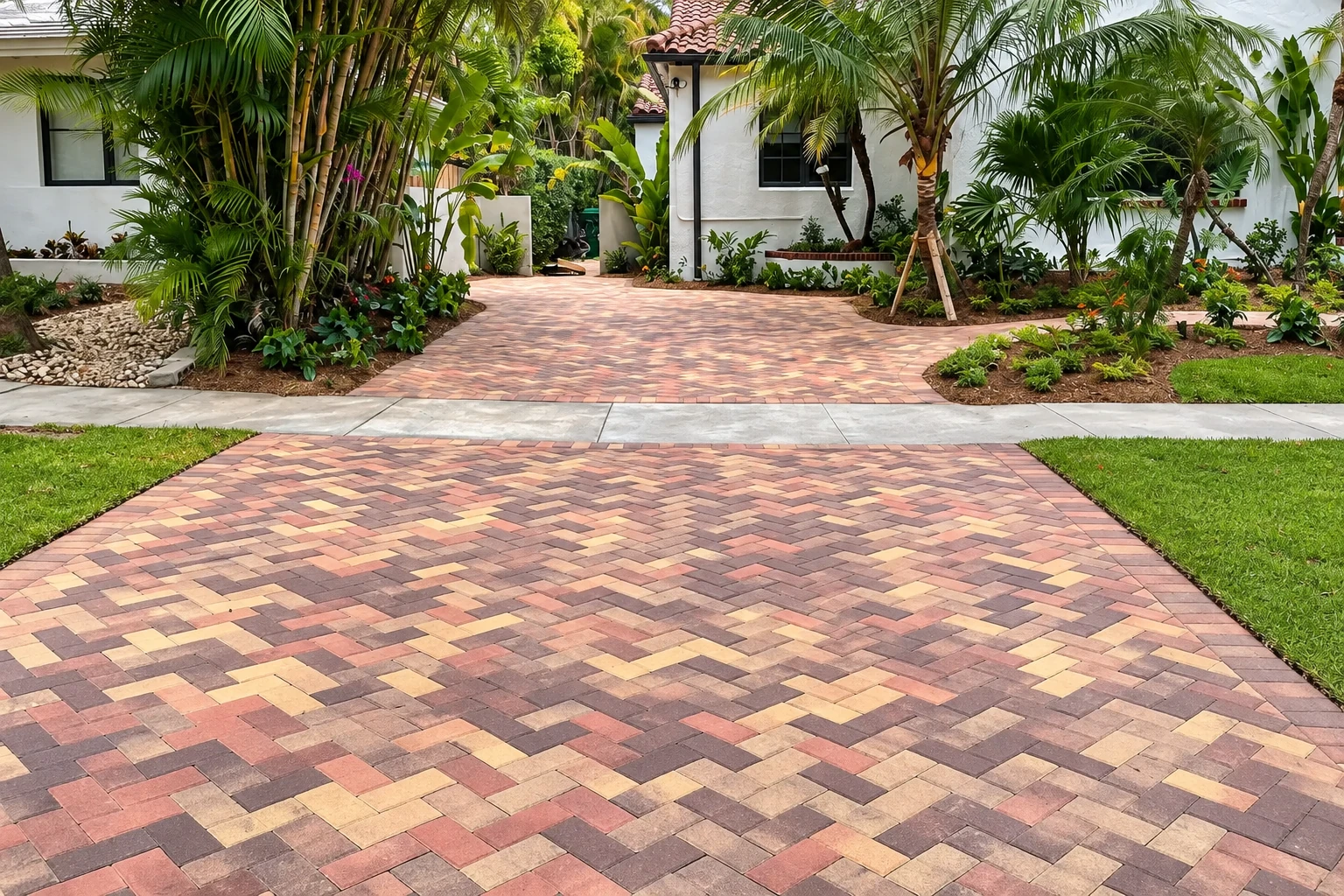
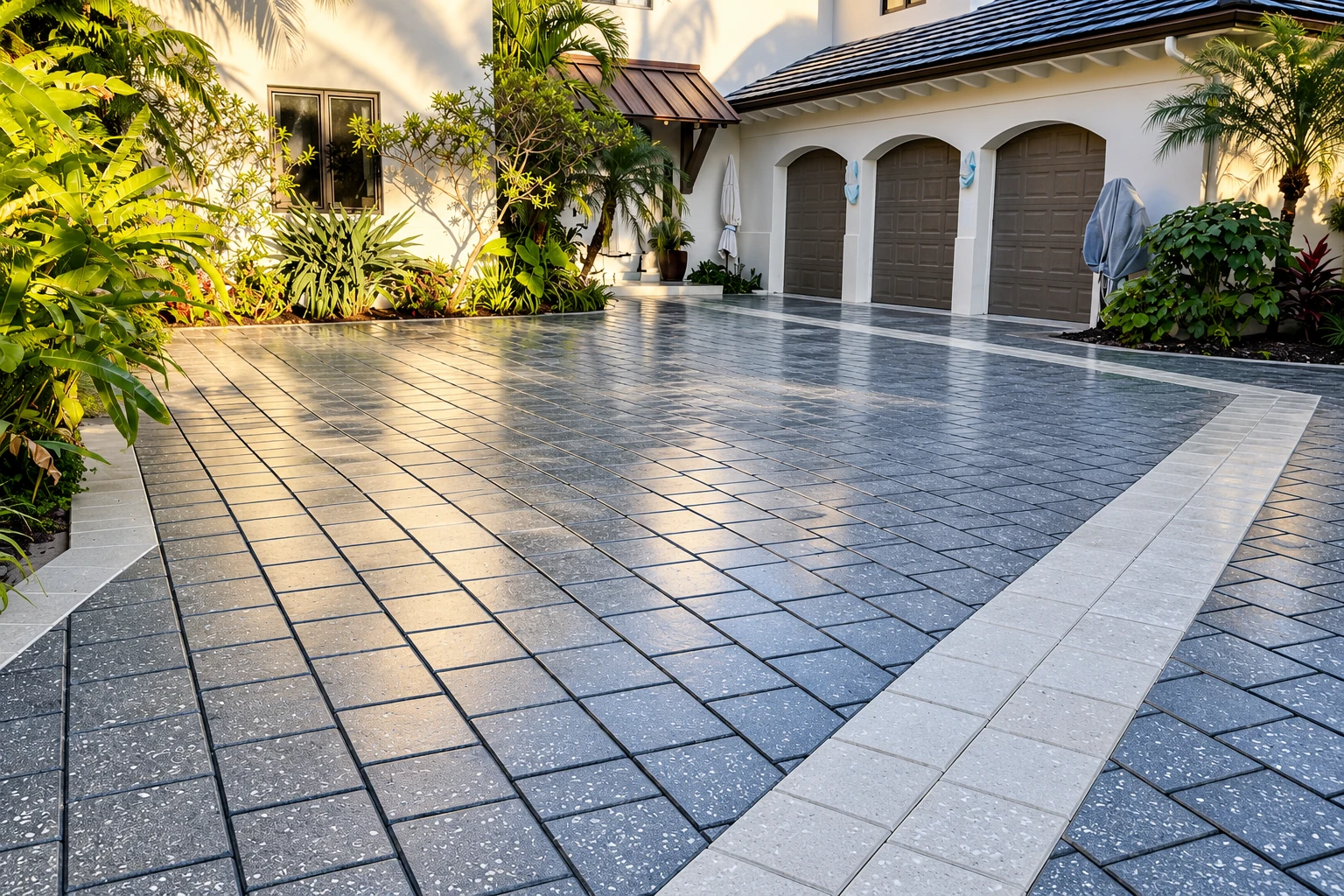
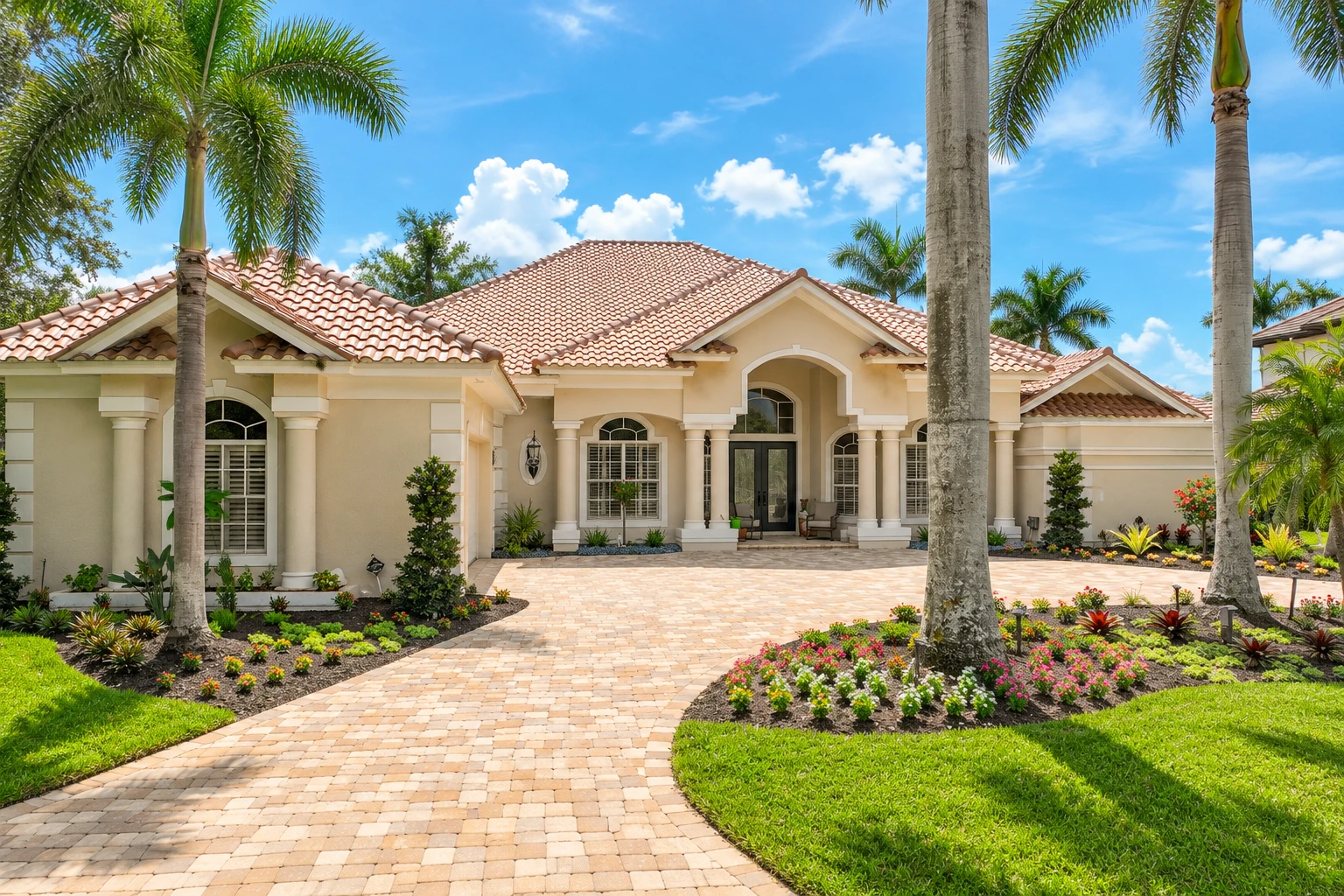
Paver driveway examples
Scroll through these paver driveways to get a feel for patterns, colors and borders before we talk about yours.
Questions about paver driveways
These are the questions we hear most about paver driveways in Lakewood. If yours isn't here, ask when you call and I'll answer it for your driveway.
Can I use large paving slabs for a driveway?
Usually not, because thinner, larger paving slabs can flex and crack under the weight of a car. Paver guidance points owners to interlocking concrete pavers anywhere a car parks or drives, since they handle cars as well as foot traffic. Slabs can still work well on a walk or patio off to the side.
What is the best way to build a base for a paver driveway?
Make it thicker than you would for a walk or patio, and size it to the traffic, soil, drainage, moisture and climate at the house, which is how paver trade guidance sets it. That's why the dig and base work change from one driveway to the next, and why I look at your ground before I put a number on it.
Is a permeable paver driveway a good idea in Lakewood, and how do I keep it clean?
It can be, as long as your yard doesn't send heavy mud runoff or blowing dust across it, since that can clog the surface quickly. Paver guidance recommends permeable pavers for home driveways, patios and walks, and keeping one clear takes ordinary sweeping or vacuum equipment, which may also open up a clogged surface so water soaks in again. Lakewood replaced older stormwater plan requirements with Low Impact Development strategies for stormwater and rainwater on development and redevelopment projects, as its ordinance defines them, so it's worth weighing a driveway that lets water through.
How long does it take before I can drive on new pavers?
Older paver specifications say right away, because concrete pavers need no curing time and are ready for traffic once the paving is done. Compared with poured concrete, that usually means your car is back on the driveway sooner.
What license should a driveway paver contractor have in California?
In California, the state's C-12 Earthwork and Paving class includes placing paving, and it also covers digging, grading and excavation, so one C-12 contractor can handle both the dig-out and the finished driveway. You can read what the class covers on the state licensing board's site. Paver industry guidance also recommends an experienced installer with a current ICPI Concrete Paver Installer certificate, so it's fair to ask any crew whether they hold one.
How much does a paver driveway cost in Lakewood?
It comes down to your driveway, and I give you a number for it once I've seen it in person. The biggest swings come from how deep the base has to go, the paver and pattern you choose and how much edge restraint the layout needs. A permeable driveway on ground that drains slowly also needs underdrains, perforated pipes that carry water out of the base, which adds work.
Where we lay paver driveways
We're based in Lakewood and work across the cities around it, from Long Beach up to Fullerton and out to Costa Mesa. Pick yours below or give us a call.
Ready to replace that driveway with pavers?
Every job is backed by our satisfaction guarantee, so call (562) 249-2437 or send the form and I'll come look at yours.