
Walkway construction in Lakewood CA - a path that fits your yard and its slope
Muddy shortcut across the lawn or a cracked old path to the door? We'll build a walkway that suits your slope and holds up.
- Route checked first We walk your slope before you choose a surface.
- Firm base under pavers We take our time compacting the ground underneath.
- Plain options Pavers, concrete or decomposed granite, with the trade-offs explained straight.
- Walk-through at the end We clean up and walk the finished path with you.
- Licensed and fully insured.
- Free quotes on site.
- Replies within 1 business day.
How do you know it's time for a new walkway?
Most walkway trouble starts small, with a worn track or one rocking paver. Catching it early usually means a simpler fix than tearing out a whole path later.
Worn dirt track across the lawn
Everyone cuts the same line to the gate or the side yard. The grass gives up, and in winter rain it turns to mud that gets tracked inside.
Pavers sinking or rocking
Low spots and loose pavers usually mean the ground underneath wasn't packed well. Left alone, the dips hold water and the trip hazard gets worse every season.
Cracked or lifted concrete path
Slabs that crack and lift at the joints often sit on ground that moved or a base that was too thin. Every season the raised edges catch more toes.
Pavers spreading at the edges
Pavers drifting outward leave gaps in the middle where weeds and sand washout start. It usually means the edging that holds them in gave way or was never put in.
Water sitting on the path
Water that sits on a walkway after it rains means the path wasn't pitched to shed it. Standing water leaves a slick film and soaks the base until it softens.
No path where you walk
A new side gate, a backyard project or a garden bed you keep stepping around usually needs a real path to it. Putting it off just wears a rut.
How our walkway construction works
I start by walking the route with you, because the slope of the path decides a lot before you pick between pavers and decomposed granite, the fine crushed stone that packs down into a firm path. Decomposed granite tends to wash away on steep runs, so it usually suits gentler yards, and on a steeper route we'll usually steer you toward pavers or poured concrete. Once the surface is settled, we dig out the path, and on pavers we take our time packing the ground underneath, because that's what keeps them from sinking. Then we set the edging or forms, lay the pavers or pour the concrete, and clean up. The price moves with the length and width of the path, the surface you pick, how much digging the slope needs and how far we have to carry material, and the schedule turns mostly on that digging and the weather. Your own numbers come with the estimate.
A walkway rarely stands alone in a yard. Where the path runs beside a planter or a property line, we can build a low wall along it with our brick wall installation work, and where it climbs a grade or needs a natural border, our stone masonry covers stone steps, edging and seat walls that match it.
What happens when you call about a walkway in Lakewood?
From your first call to the last sweep of the finished path, here's how a walkway job runs with us.
Call or send the form
Tell us where the path should run, and we'll set a time for me to come out and see the route.
Get a written estimate
I walk the route, check the slope and ask what you want. You get a written estimate spelling out the surface, size and price.
Get permits and build
If your job needs a permit, we get it from the office for your address first. Then we dig out, pack the base and lay the path.
Walk the finished path
We clean up and walk the finished path with you, so you can check the edges, joints and how it drains before we leave.
Why Lakewood homeowners call Caliber Lakewood Concrete and Masonry
We check your soil first
Swelling clay soil is common in California and hard on pavements, so we check the ground before we plan the base.
I see every route myself
I see your route myself, and the small crew I work alongside builds it, so nothing gets lost in between.
Our own business since 2017
We've run this business since 2017, and we still won't rush a base just to finish a day early.
Licensed and fully insured
Ask to see the license and insurance when I come out, before you agree to anything or any digging starts.
Get a free on-site walkway estimate
Tell us where the path will run, how much it slopes and whether you're leaning toward pavers, concrete or decomposed granite. We reply within one business day to set up a free on-site estimate, with no obligation.
Walkway ideas worth a look
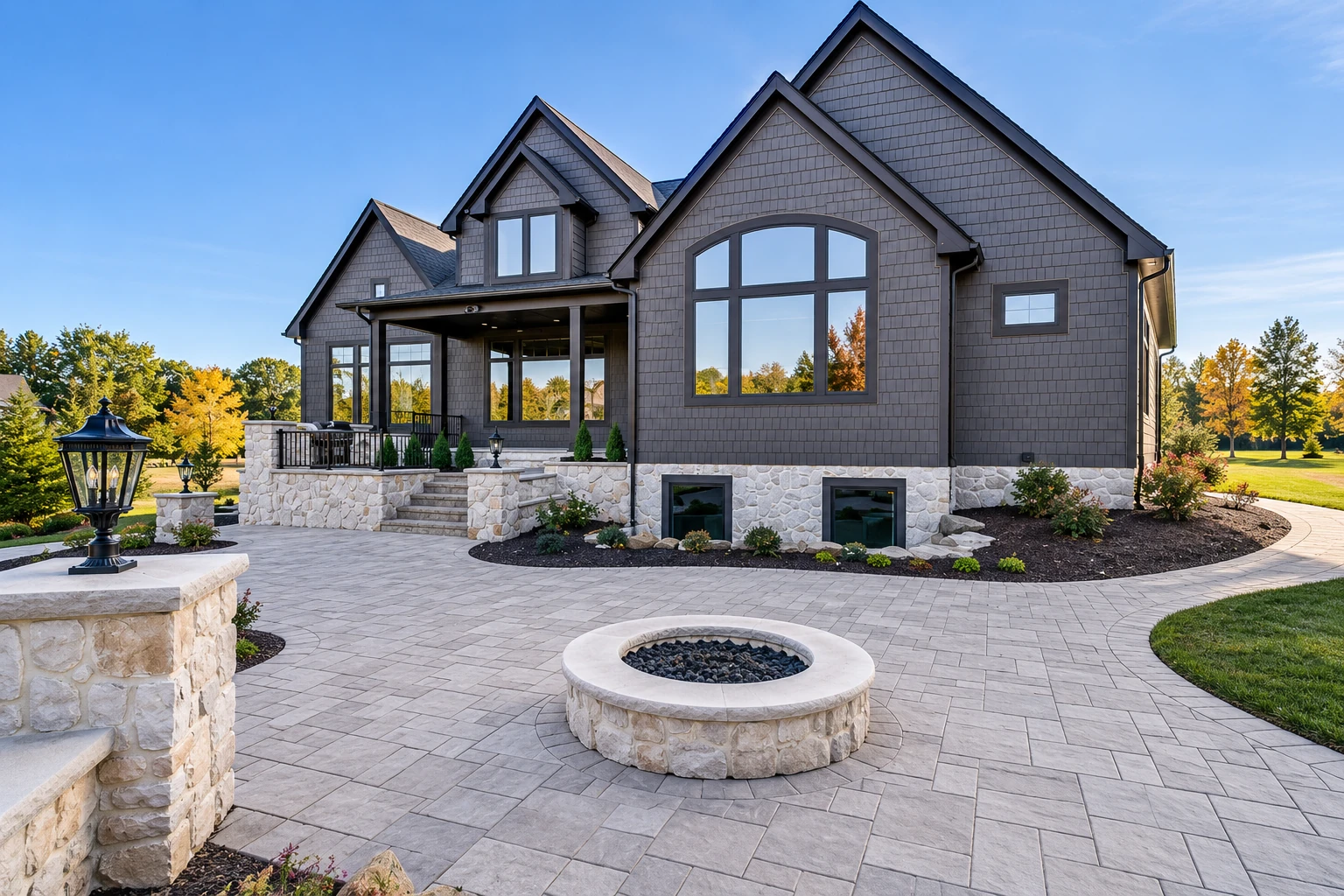
Look through these example walkways in pavers, concrete and decomposed granite to get a feel for the surface you'd want.
Walkway questions we hear most
Here are straight answers to what Lakewood homeowners ask before they build a path. If your yard raises a different question, call or send the form and ask.
Is decomposed granite cheaper than a concrete walkway?
Yes, one garden guide puts decomposed granite below both concrete and brick on cost. It also soaks up most of the rain where it falls, so you have less runoff to deal with than a concrete path leaves. Just keep the slope in mind, because on a steep route the savings tend to wash downhill with the granite.
Does a walkway contractor need a license in California?
For most walkway jobs, yes. The Contractors State License Board requires a license when the work needs a building permit, is done with employees, or costs $1,000 or more in labor and materials, and the board says a bigger job can't be split into smaller pieces to stay under that line. For a poured path, it's fair to ask whether the bidder is licensed as a concrete contractor, which is the classification the board gives for forming, pouring and finishing flat concrete.
What causes paver walkways to sink?
Usually it's soil underneath that wasn't packed well enough before the pavers went down. Paver industry guidance calls compaction critical, because good compaction keeps settling to a minimum, so ask every bidder how their crew will compact the ground. If the answer is vague, the base probably will be too.
Can pavers be installed in the rain?
Not in heavy rain. Industry guidance says to hold off on laying sand or pavers while it's pouring, so paver work is best planned for a dry stretch of weather. If a storm lands on the schedule, we'd rather wait a day than set pavers in it.
How do I keep pavers from spreading apart on a walkway?
Put solid edge restraints, the edging that holds the outside rows in place, along the sides of the path, since they keep the pavers tight and locked together from end to end. Industry guidance treats them as an essential part of a paver job, not an extra.
Do you build concrete walkways in Lakewood or only pavers?
We build poured concrete paths as well as interlocking pavers and decomposed granite. Concrete gives one smooth surface, pavers come in more shapes and colors, and granite has the softest, most natural look. Which fits best comes down to your slope and how much foot traffic the path takes, and I'll talk it through when I come out.
Where we build walkways
We're based in Lakewood and build walkways in the cities around it, from Long Beach up to Fullerton and out to Costa Mesa. Find your city below.
Ready for a walkway that fits your yard?
We pick up until 9 PM every day, weekends included, and the work is backed by our satisfaction guarantee.