
Retaining wall construction in Lakewood CA - a wall that drains and stays put
Soil spilling onto the patio or an old wall starting to lean? We build retaining walls planned around drainage, so they hold your slope.
- Drainage planned first Every wall plan starts with where the water will go.
- Unhurried block work We take the time each course needs, not the fastest route.
- Wall matched to yard Height, soil and slope decide the wall, not a catalog.
- Built to hold up We build for years from now, not just the day we leave.
- Licensed and fully insured.
- Free quotes on site.
- Replies within 1 business day.
How can you tell a retaining wall is failing, or that you need one?
A wall that's starting to move rarely fixes itself, and soil that keeps sliding only gets harder to hold back. Catching these early keeps the job smaller.
Wall leaning out at the top
A wall tipping forward usually has more water or soil pressure behind it than it was built for. Left alone, it tends to keep moving, and the fix gets bigger.
Water seeping through the face
Wet stains or trickles from the face mean water is collecting behind the wall with nowhere to drain. Each heavy rain adds to the load it's carrying.
Soil washing onto your patio
Mud on the patio or walkway after rain means a slope is eroding with nothing holding it. Each storm takes a little more of your yard downhill.
Bulging or cracked blocks
A belly in the wall, or blocks cracking and shifting out of line, usually means it's losing to the soil behind it. Bulges don't flatten back out on their own.
Gap opening behind the wall
A crack or sunken strip of ground just above the wall means the soil is moving or washing out underneath. Filling it usually buys a season, not a fix.
A slope you can't use
A steep yard you can't plant, mow or put a patio on is the other common call. A terrace wall turns that slope into level ground you'll use.
Retaining wall construction, planned from the drainage up
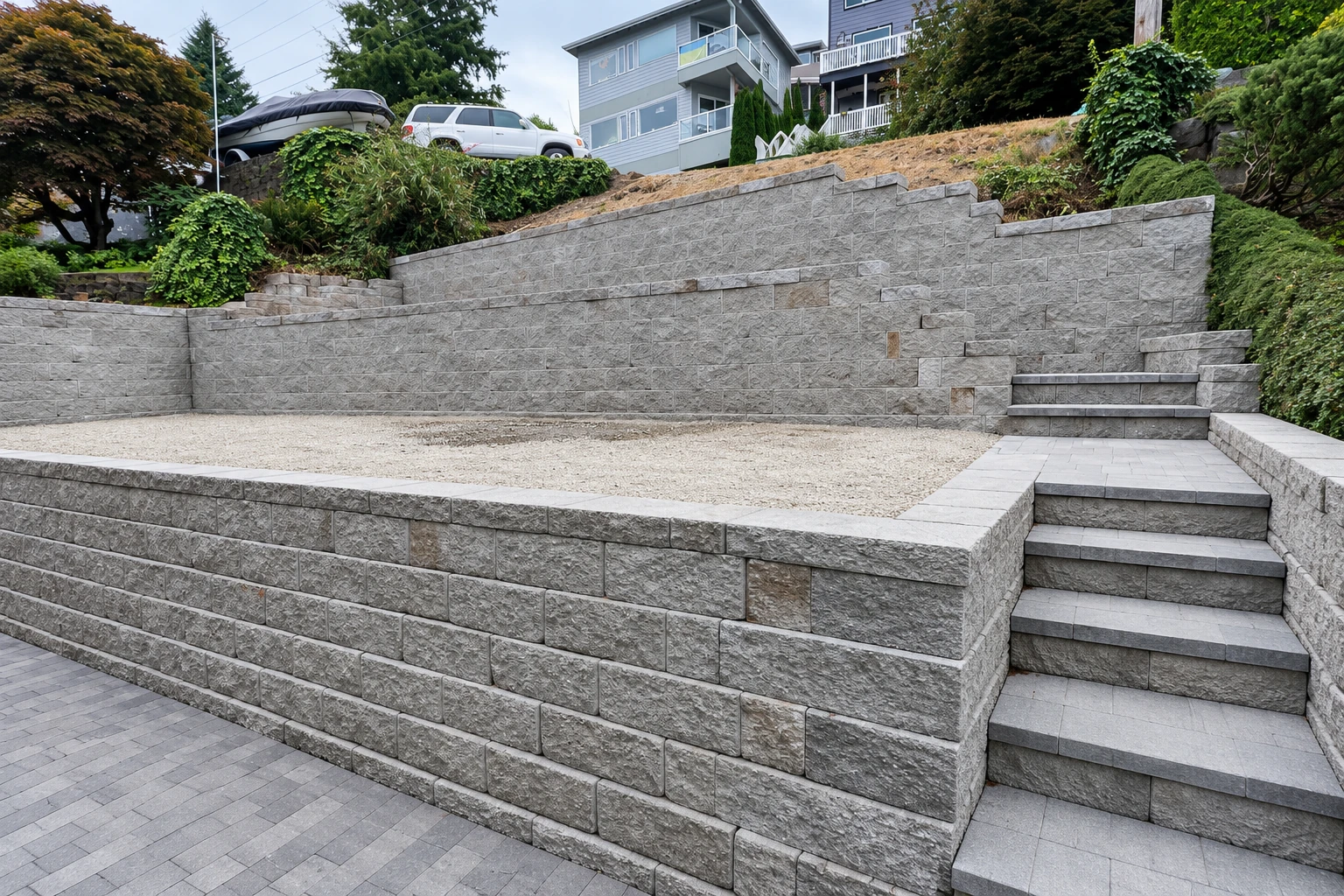
On every retaining wall we build in Lakewood, drainage is the first thing I plan, because water stuck behind a wall is what pushes it over. Next I match the wall to your yard. Usually that's a segmental wall, which means manufactured concrete blocks stacked without mortar that hold the soil back mostly by their own weight, locked course to course by built-in concrete keys or connectors so the whole thing acts as one wall. That kind of gravity wall suits a grade change under roughly 3 to 4 feet on good soil with level ground above it, and taller walls or tougher ground call for reinforcement instead. Then our crew digs out, packs a firm base, sets the bottom row level and builds up, laying in the drainage as each course goes on before we backfill and cap it. The price moves with the wall's size, whether it needs reinforcement and how much digging and drainage your yard takes, and the schedule turns on that same digging plus any permit. You get your own figure from the estimate once I've seen the yard.
Not every old wall needs to come down. If yours is brick or stone that's worn but still standing straight, masonry restoration may be all it needs, and I'll tell you so before we talk about tearing anything out. Some homeowners also use the same visit to talk over a fireplace installation, which our crew builds with the same slow, careful brick and block work.
What happens when you call us about a retaining wall in Lakewood?
Here's how a retaining wall job runs with us, from the first call to walking the finished wall together.
Call or send the form
Tell us about the leaning wall or the slope you want to tame. Then I come out to walk the yard with you.
Site visit and estimate
I check the height, soil and water path, ask what you want and give you an estimate for the wall that fits.
Permit, then the build
If you go ahead, we sort out any permit with the office for your address. Then our crew digs, sets the base and builds the wall.
Walk it together
When we're done, we clean up and walk the wall with you. I'll show you where the drainage comes out and what to keep clear.
Why Lakewood homeowners call Caliber Lakewood Concrete and Masonry
In business since 2017
I've run this business since 2017 and learned the trade under older masons, so walls get built the slow, proper way.
Same hands plan and build
The small crew I work alongside builds your wall, so the person who planned the drainage is there when it goes in.
Planned for swelling clay
Clay soil around Los Angeles can swell in rainy seasons, so we plan each wall to take that extra push.
Licensed and fully insured
Nobody should have to wonder if the crew in their yard is covered. Call (562) 249-2437 or send the form to start.
Get a free on-site estimate for your retaining wall
Tell us the wall's length, rough height, the slope above it and any EQ Zapp result, and we'll reply within one business day. Then I come out to look and give you the estimate, with no obligation.
Retaining walls worth a look
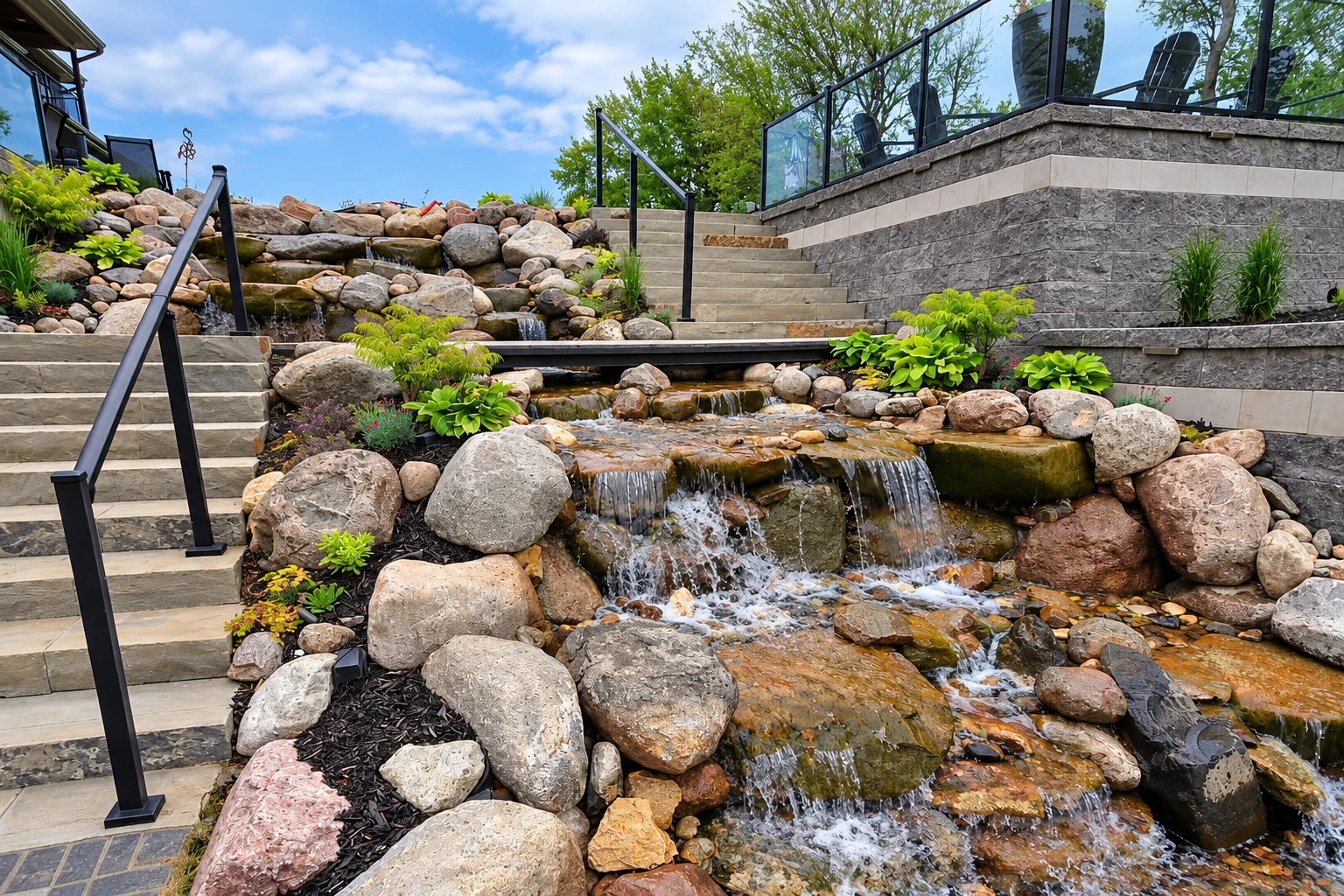
Look through these examples of retaining walls and terraces to get a feel for the block, height and finish you'd like in your yard.
Retaining wall questions we hear
Here are straight answers to what homeowners ask before building a retaining wall. If your yard raises a question that isn't here, call and ask about your own wall.
How much does a retaining wall cost near Lakewood, CA?
Building a retaining wall in Los Angeles usually costs about $3,000 to $11,500 per job, which is a fair range to plan around nearby. Height is the big lever, because taller walls cost more per linear foot than low ones. Your own number comes from the estimate after I've looked at the yard.
When does a retaining wall need reinforcement?
A retaining wall needs reinforcement when it's taller than a gravity wall can handle, or when it has a slope above it, extra weight near the top or difficult soil underneath. Builders call that extra weight a surcharge, and a driveway or parked cars near the top are common ones. One trade guide also lists organic soils and expansive soils, the kind that swell and shrink, as unsuitable ground for a block wall, which is why I look at the soil before I price anything.
What causes a retaining wall to fail?
Poor drainage is the usual cause. Water adds load to a wall, can wash soil out from under it and weakens the ground around it, and one field guide calls lack of drainage the most common reason walls fail. That guide lists drainage stone, filter fabric, an outlet and a toe drain, a pipe along the base that carries water out to open ground, so ask any contractor how their wall will drain.
How do I know if my Lakewood property is in an earthquake hazard zone?
You can look it up yourself on the state's EQ Zapp map, which works from a phone or computer. It matters because in California, building on property in a seismic hazard zone may mean you're required to study the hazard and deal with it as part of local permitting. We find out which office handles permits for your address, and if your wall needs one, we take care of getting it before work starts.
What license does a retaining wall contractor need in California?
One classification from California's contractor license board covers this work, installing masonry units for load-bearing and non-load-bearing walls, with or without mortar. That reaches dry-stacked block walls as well as mortared brick ones, so ask which license a contractor holds before you hire.
Is a timber or concrete block retaining wall better?
Concrete block is the better pick for most yards. One field guide suggests timber where the wall is modest in height, the budget is tight and a 15 to 25 year service life is acceptable. We're masons, so block and stone is what we build, and if a lower, simpler wall would do the job, I'll say so.
Where we build retaining walls
We're based in Lakewood and build walls across nearby cities, from Long Beach up to Fullerton and out to Costa Mesa. Pick your city below or call us.
Talk to us about your retaining wall
Every retaining wall we build is backed by our satisfaction guarantee, and one call gets me out to look at yours.